
Show up

I went to an art opening recently.
I wasn’t there to network. I wasn’t there to hand out cards or work the room or any of that. I went because there was work I wanted to see and people I wanted to be around and because showing up is part of the job.
And while I was there something happened that always happens when you actually leave the studio and go out into the world. I ended up in a conversation with someone standing in front of a piece. We started talking about technique and it went somewhere. Into content, into subject matter, into the deeper meanings underneath all of it. By the end of the conversation I understood the artist’s work better than I did when I walked in. Not because I read the wall text. Because I talked to a stranger who was genuinely looking.
This is research. Even when it doesn’t feel like it.
Most artists think of research as something that happens in the studio or online. Reading. Looking at images. Watching videos. And that’s all real. But the research that changes how you understand your audience happens in person, in real time, watching real people encounter art in real space.
Go to a gallery opening. Don’t just look at the work. Watch the people looking at the work. What stops them. What they walk past without a second glance. What pulls them back. What they say to each other when they think nobody is listening.
Go to a museum and sit in a room for a while. Really sit. Watch who comes in and how long they stay and what they photograph and what they ignore.
Go to an art fair and watch collectors move through booths. Watch what they pick up. Watch what they put down. Watch where the conversation starts and where it stops.
Go to an artist talk. And listen not just to the artist but to the questions the audience asks. This is where it gets interesting. The questions tell you what people want to understand, what confuses them, what they’re hungry for, what they assumed going in and what surprised them. A room full of people asking questions about an artist’s work is a map of what that work is doing and what it isn’t. Pay attention to that map.
You are being a detective. And all of this is data.
I know some of you are afraid to show up.
Afraid of running into someone you had a bad experience with. Afraid of feeling like you don’t belong in the room. Afraid of what it means if your work isn’t in the show and theirs is. Afraid of being seen wanting something.
I get it. I’ve felt all of that.
Go anyway. The fear is loudest before you walk in. Once you’re inside looking at work it usually quiets down because the work is more interesting than the story you were telling yourself in the parking lot.
Here’s the thing about audience. You cannot figure out who yours is by thinking about it alone in your studio. You have to go out and encounter actual humans encountering actual art and pay attention to what you see.
Some people buy art because they love it viscerally and immediately. They see it and something happens in their body before their brain catches up. Some people buy art because it fits the space. Some people buy art because they want to support an artist they believe in. Some people collect slowly and deliberately and some people buy impulsively and never look back.
None of these are wrong. All of them are your potential audience depending on what you make and how and where you show it.
But you won’t know which of these people are yours until you go watch people and work and space interact in real time.
There’s something else that happens when you show up consistently. You become part of the ecosystem. Not in a calculated way. Just in the way that showing up regularly at the places that matter to you makes you a real presence in those places.
People start to recognize you. You start to recognize them. Conversations happen. Not because you engineered them but because you were there.
That is how most of the real things in the art world actually start. Not through cold emails or applications. Through being in the room.
And here’s the reciprocity piece. When you show up for other artists’ openings, their talks, their events, you are doing for them what you want people to do for you. You are being the audience you wish you had. The art world runs on that exchange. The artists who show up for others are almost always the ones who have people showing up for them. Not as a transaction. As a culture.
Be part of that culture.
And then you go back to your studio and you make the work. And the work is informed by everything you saw and heard and felt and noticed. And you understand a little better who it is for and what you want it to do in the world.
Showing up is research. Showing up is relationship building. Showing up is how you understand your audience by actually being around people.
Go to the thing. Take notes. Come back and make something.
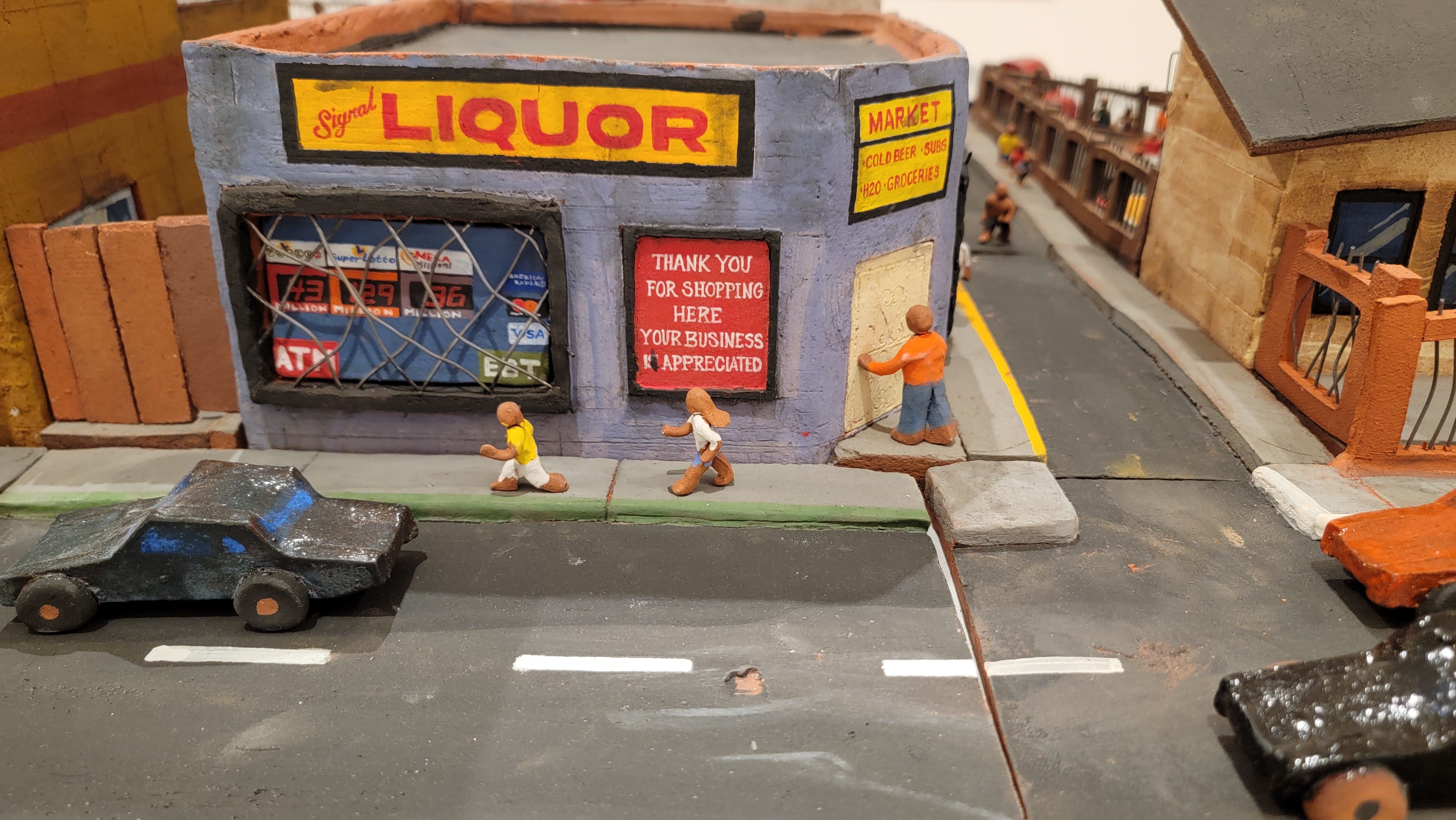
Christopher Suarez at Made in LA at UCLA Hammer 2023
Thank you. There is something special about having these conversations.
Talking to other humans!!