
What It Actually Takes to Keep Making Art After 50
What a book club revealed about the gap between generations, the pull of place, and what it really takes to keep making art

We were reading Sharon Louden’s Last Artist Standing: Living and Sustaining a Creative Life Over 50, and the conversation went places the preface didn’t quite reach.
The Gap No One Talks About
Louden writes about the dangerous divide between artists under 30 and those over 50. Someone without kids but decidedly “kid-adjacent” talked about why conversations across generations matter: “They view things really differently... they’re that age growing up now. So they have a very different perspective.”
Another person reflected on mistakes made with adult children: “Not being able to inhabit their reality and understand what their experience has been... the world is completely fucking different now.”
Young people experiencing only Trump-Biden-Trump politics without talking to someone who’s experienced more will get a warped view. They need someone who’s been here longer saying, “Wait, that’s not the whole story.”
Someone else cares for their 95-year-old grandmother and treats her like an actual person, not a fragile artifact. Another member of the group said it was the first time they’d witnessed someone really see the person through the aging. “If we all acted that way, and honored all phases of life and all stages of life and ability, it would be such a big difference in the world.”
The group agreed: pairing younger and older artists could be transformative. Having friends of different ages should be normalized, not treated as unusual.
What Perseverance Actually Looks Like
We read Mary Addison Hackett’s essay. She moved between Chicago, Los Angeles, Nashville, and the Mojave Desert. Worked as a film editor, teacher, various day jobs. Experienced divorce, financial crisis, the death of her mother.
Her financial consultant told her most of his clients were miserable, working at jobs they hated so they could retire and finally live their lives. As an artist, she loved what she did and seemed happy. But yes, at some point she might have to sell her home and downsize.
That’s the reality Louden’s book documents—not romanticized struggle, but the actual trade-offs of sustaining a creative practice over decades.
What struck everyone most was Hackett’s final move back to Nashville, knowing she “might be operating further outside the art world... but closer to who I am as an artist.”
Someone connected this to how formative landscapes get deeply ingrained in an artist’s work. The place where you spent your formative years becomes part of your artistic DNA. “For me, being in New England in the autumn is the place I feel the most normal.”
Another person wondered about their own place—maybe the desert? They grew up there. They like LA but don’t feel like it’s their place in terms of their art.
Stories That Show How Artists Actually Live
Throughout the conversation ran questions about what longevity in art means. Someone shared that their father died at 50 of a heart attack—they’re now 52. But their great-grandmother lived to 92. “That means being 52, I could have 40 years left. I do not want those 40 years to sit here thinking people should talk to me because I’m gonna die soon.”
Someone else’s family doesn’t have great genetics—they don’t live to be very old. But their husband’s aunt went to rock shows in snowstorms at 90 because her grandson was in a band and she wanted to know the competition. When she was 100, there was a party planned as either her 100th birthday or her memorial. “They tell me I’m dying, but I just don’t see it,” she said. She got COVID a year later, lived another year after that, and died at 102.
Someone found out they can go to the pool for a dollar a day because they’re over 50. Habitat for Humanity will provide roof replacement services for seniors over 50. There might be perks.
But mostly there’s complexity. Bodies change. Opportunities shift. The art world moves on. And somehow artists keep making work anyway.
What the Book Is Actually About
Louden’s book documents how to live fully, create authentically, and maintain community across a lifetime. It’s about telling stories that show artists live, make things happen, persevere—not through superhuman willpower but through choices, adaptations, and stubbornness.
The conversation revealed what matters: sustaining a creative life over 50 isn’t about denying realities or pretending difficulties don’t exist. It’s about honoring lived experience, fostering intergenerational dialogue, and recognizing that the capacity to create—to start something from nothing, assess and observe differently, and problem solve like no one else—can endure across decades.
Hackett’s essay demonstrates this. She kept making work through financial crisis, divorce, cross-country moves, and her mother’s death. Not because she had some special resilience gene, but because being an artist was who she was. The work continued because that’s what work does when you don’t give it permission to stop.
Sometimes the most radical act is simply continuing—not despite everything, but through it.
Last Artist Standing: Living and Sustaining a Creative Life Over 50 by Sharon Louden
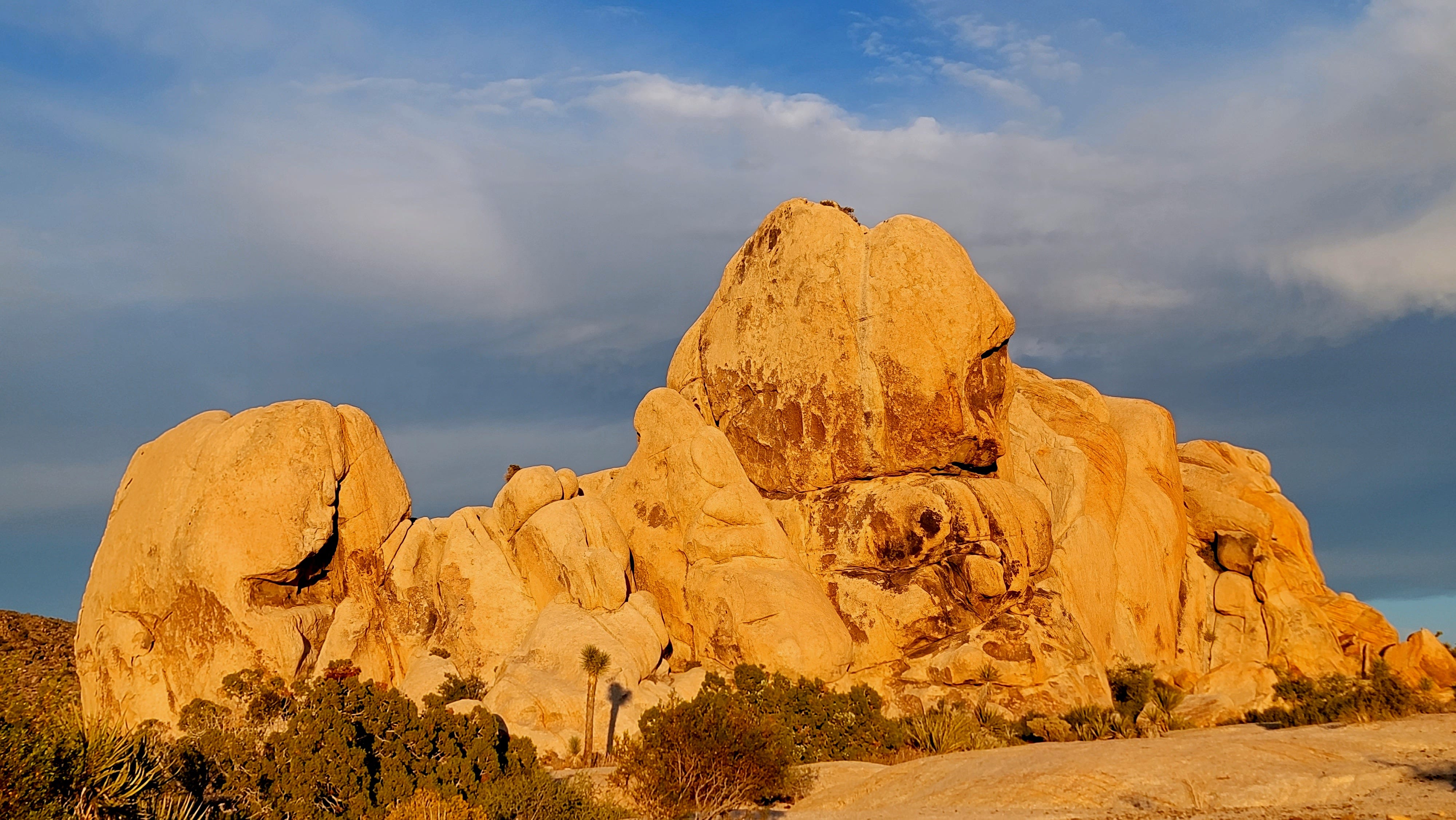
Joshua Tree National Park at Golden Hour, Photo by Kristine Schomaker